




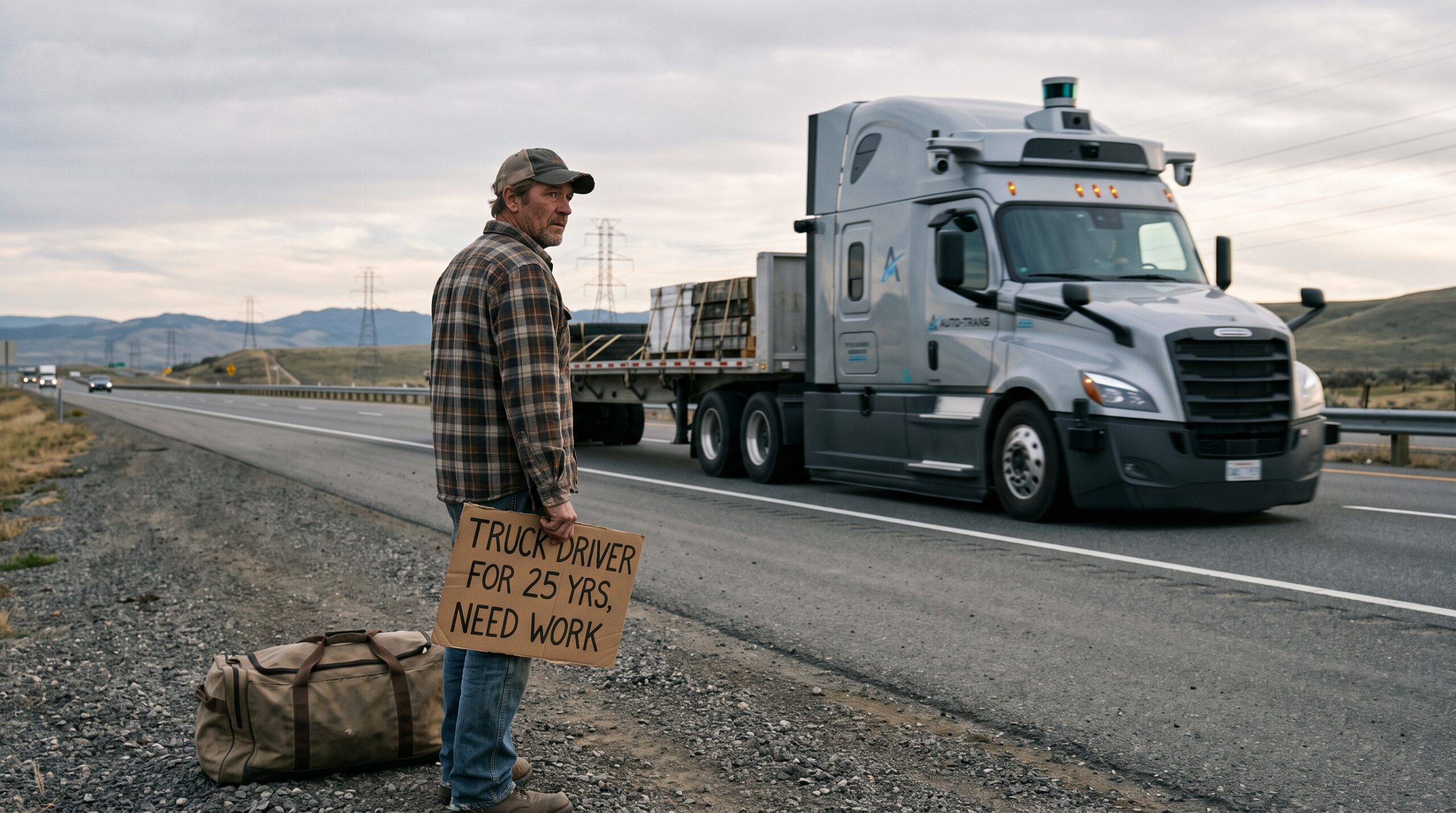
For decades the truck driver has been reduced from a well paying career to a job that barely covers his expenses, all while working the same grueling hours. Cuts in benefits, bonuses, and most amenities consistently make this profession less desirable to new workers and untenable to veterans. Record shipping volume and profits are reached year after year yet the truck driver is systematically reduced from the benefit of this economic boom in the industry. As the trucker suffers the industry leaders celebrate the coming inevitability, automation.
For years, automated trucking was presented as a distant promise. The technology was always “almost ready,” the launch dates kept moving, and drivers were told not to worry. That argument has become harder to make. In 2025, Aurora began hauling freight without a driver in the cab on a Dallas–Houston route. In July 2026, the company announced a second generation of driverless trucks, built with updated hardware and software. Aurora says the new system is designed to lower equipment costs and support wider commercial operations. Those are company claims and plans, not proof that driverless trucking has already transformed the entire industry. But the direction is plain: carriers and technology companies are working to make trucks run farther, for longer, with fewer people behind the wheel.
That goal is built into the business model. A driverless truck does not need rest breaks or time off the road to satisfy a human driver’s hours-of-service limits. Aurora has said round-the-clock operation could more than double truck utilization potential. For a carrier, that means the same expensive tractor could haul more miles and freight. For the driver, it raises an unavoidable question: if a company can move more freight with fewer drivers, who gets the savings—and who pays the price?
For truck drivers, the first effects may arrive before every cab is empty. Long-haul routes between freight hubs are the most obvious place for automation to expand. A human driver may still be needed to move freight through city streets, handle local deliveries, inspect equipment, secure cargo, or respond when something goes wrong. Some carriers may use drivers for those tasks while shifting the long highway portion to automated equipment. However a job tending trucks at a terminal is not automatically a replacement for a professional driving career. If automation is moving from test tracks to paying freight, then workers should not be left to discover the consequences after the business decisions are already made.